
Issue 8: Why did my kid ask to build credit?
Winter 2026
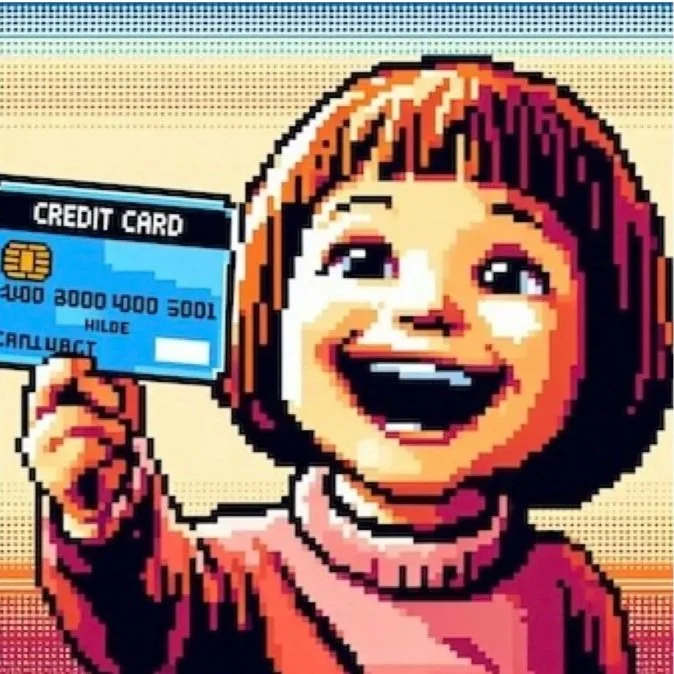
“Hey Dad, should I build my credit?”
Your pre-teen likely heard from an influencer that building credit is important. Does good credit directly affect financial freedom, opportunity, and long-term security?
As adults, we know that a strong credit history shows lenders, landlords, and even some employers that we are reliable and responsible with money. Without established credit, many doors remain closed—or become much more expensive to open.

Credit Matters
One major reason to build credit is to access better borrowing options. Some of the biggest purchases in life cost less when you have excellent credit. Good credit makes it easier to qualify for loans and it lowers the interest rate you’ll pay. Over time, lower interest rates can save you thousands of dollars on things like car loans, student loans, or mortgages. Poor or nonexistent credit often leads to higher rates, larger deposits, or outright denials.
Credit also plays a key role in housing. Many landlords check credit reports when deciding whether to approve a rental application. It’s an indication that someone will do what they promise when they make an agreement. Strong credit can help you secure an apartment more easily, avoid co-signers, and reduce security deposits. Similarly, utility companies and cell phone providers may require deposits if you lack credit, costing you more upfront.

What Does Credit Affect?
Beyond borrowing and housing, credit affects everyday life more than people realize. Insurance companies in many states use credit-based scores to help set premiums. A better credit profile can mean lower auto or renters insurance costs. In some industries, employers may review credit reports (not scores) as part of background checks, especially for roles involving finances or sensitive responsibilities.
Building credit also gives you flexibility and access to the world of credit cards. While these often carry high interest rates, credit cards can help manage cash flow, handle emergencies, and earn rewards, as long as they’re used responsibly. Some of the most desirable credit cards with the best perks require the highest range of credit scores. Trying to build credit during a financial emergency is difficult, and having established credit before you need it, can be crucial.

Maybe, No?
Now that we’ve confirmed your suspicions that building good credit is important, let’s address whether it is actually wise to access credit as a young adult. Car loans and credit cards are not healthy choices for someone just getting started. Many believe that the abundance of educational loans are the cause of today’s inflated tuition for higher education. In short, the ability to finance - is not always a good thing.
If you are getting a loan on that flashy car or carrying a balance on credit cards, the landscape of credit can be fraught with landmines. In the long term, It CAN be better to have insufficient credit, rather than to have been offered that loan in the first place. We should not forget that at the end of the day, credit is used to buy something you probably couldn’t afford up front. It must be used wisely.

Go For It…SLOWLY
So sure, it might be a great idea to add your pre-teen as an authorized user on your credit card. Let them learn the ins and outs of compounded interest when it comes to debt. Let them see how making minimum payments never works out well. Learn how the luster of consumerism fades, while a credit card balance has an awful echo. However, it would NOT be prudent to arm anyone with an 850 credit score at the age of 18. If you’re going to make the mistakes of carrying a balance or taking out a few cash advances…better it be on a card that maxes out at $2,000 vs $30,000. The potential for misuse, or for digging deeper into the hole of debt, would be higher if a child’s “great credit” unlocked reckless high dollar loans. Some things are better earned with time and experience.
Ultimately, building credit is about creating options. It puts you in control, reduces financial stress, and helps you reach major life goals more efficiently and affordably. The credit system works so that both borrowers and lenders are protected from themselves and each other. For a youngster, there’s no reason to rush this process.
Jon & Anh @MyUncle_Satoshi
All statements are a collection of our thoughts and not financial advice.